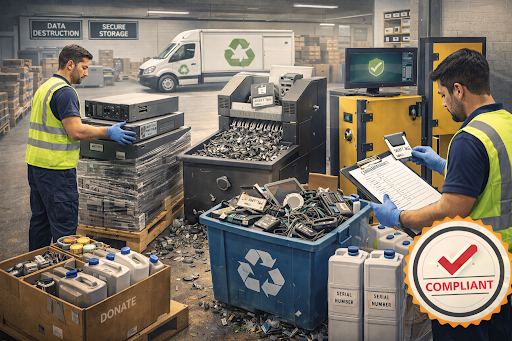
Managing obsolete IT assets has become a critical responsibility for modern enterprises operating in regulated environments. Improper handling of outdated technology can expose organizations to legal, environmental, and data security risks.
A structured approach to IT equipment recycling allows businesses to retire assets responsibly while meeting compliance and sustainability expectations.
The Growing Compliance Burden on Enterprises
As digital infrastructure expands, regulatory scrutiny around asset disposal continues to intensify. Enterprises are expected to manage obsolete IT equipment with transparency, accountability, and adherence to established standards.
- Regulatory Oversight
Governments and regulatory bodies impose strict rules on electronic waste disposal to prevent environmental harm. Enterprises must demonstrate adherence through documented processes and certified disposal methods. Non-compliance can result in penalties and operational disruption.
- Audit and Reporting Expectations
Compliance frameworks increasingly require traceability for retired IT assets. Businesses must maintain accurate records showing where assets were processed, recycled, or destroyed. These records play a vital role during internal and external audits.
- Industry-Specific Obligations
Sectors such as finance, healthcare, and telecommunications face additional disposal requirements. Handling obsolete assets within these industries demands heightened attention to regulatory detail and secure processing practices.
Risks Associated With Improper IT Asset Disposal
Improper disposal of obsolete IT equipment exposes enterprises to risks that extend beyond environmental concerns. Understanding these risks helps organizations prioritize compliant disposal strategies.
- Data Exposure and Breaches
Retired devices often contain sensitive corporate and customer data. If data is not securely destroyed, organizations face potential breaches, reputational damage, and regulatory penalties tied to data protection laws.
- Environmental Liability
IT equipment contains hazardous substances such as heavy metals and chemical components. Incorrect disposal can contaminate soil and water, leading to environmental liability and regulatory action.
- Brand and Stakeholder Impact
Stakeholders increasingly evaluate companies based on environmental and ethical practices. Mishandling obsolete assets can erode trust among clients, investors, and partners.
Structured Disposal as a Compliance Strategy
A structured disposal framework ensures obsolete IT assets are handled consistently and in line with compliance obligations. This approach integrates environmental responsibility with operational efficiency.
Enterprises that implement formalized asset retirement programs align disposal activities with internal policies and external regulations. Engaging specialized providers for IT equipment recycling enables businesses to ensure assets are dismantled, processed, and documented according to recognized standards. This structured approach reduces compliance gaps while supporting sustainability goals.
- Policy-Driven Asset Retirement
Clear internal policies define when and how IT assets are retired. These policies establish accountability and ensure consistent decision-making across departments.
- Certified Processing Channels
Using certified recycling and disposal channels ensures that obsolete assets are handled according to regulatory guidelines. Certification provides assurance that environmental and data security standards are met.
- End-to-End Documentation
Comprehensive documentation from collection to final processing supports compliance verification. This transparency strengthens audit readiness and regulatory confidence.
Data Security as a Core Compliance Element
Data protection remains a central concern in the disposal of obsolete IT assets. Enterprises must integrate data security measures into every stage of the disposal process.
- Controlled Data Destruction Methods
Secure data destruction techniques ensure that stored information cannot be recovered. These methods protect organizations from breaches and align with data protection regulations.
- Chain-of-Custody Management
Maintaining control over assets from decommissioning to final disposal prevents unauthorized access. Documented custody ensures accountability throughout the process.
- Verification and Certification
Verified data destruction certificates provide tangible proof of compliance. These records support regulatory audits and internal governance requirements.
Environmental Compliance and Resource Responsibility
Environmental regulations emphasize the responsible handling of electronic waste to minimize ecological impact. Enterprises must integrate environmental compliance into their asset disposal strategies.
- Hazardous Material Management
IT equipment contains components that require specialized handling. Proper management prevents environmental contamination and ensures regulatory alignment.
- Material Recovery and Reuse
Recovering valuable materials from obsolete equipment reduces reliance on raw resource extraction. This practice supports circular economy principles and environmental compliance objectives.
- Sustainability Reporting Alignment
Responsible disposal practices contribute to sustainability metrics and reporting. These efforts strengthen corporate environmental disclosures and stakeholder communication.
Partner Selection for Compliant Disposal
Selecting the right disposal partner plays a significant role in achieving compliance-focused outcomes. Enterprises benefit from working with providers experienced in regulated disposal environments.
Organizations often evaluate IT equipment recycling companies in Dubai based on certification, process transparency, and regulatory knowledge. Partnering with experienced providers ensures that obsolete IT assets are handled in accordance with regional and international compliance standards. This collaboration reduces risk while enhancing operational confidence.
- Regulatory Knowledge and Expertise
Experienced partners understand local and international regulations governing electronic waste. Their expertise helps enterprises avoid compliance pitfalls.
- Process Transparency
Transparent disposal processes allow organizations to track asset handling and verify compliance. Clear communication strengthens trust and accountability.
- Scalable Service Capabilities
Enterprises with large or distributed IT infrastructures require partners capable of handling volume and complexity. Scalable services ensure consistent compliance across operations.
Integrating Disposal Into Enterprise Governance
Compliance-focused disposal should be embedded within broader governance and risk management frameworks. This integration ensures long-term alignment with organizational objectives.
- Cross-Department Coordination
IT, compliance, and sustainability teams must collaborate on disposal strategies. Coordinated efforts improve consistency and regulatory alignment.
- Continuous Process Evaluation
Regular reviews of disposal practices help organizations adapt to evolving regulations. Continuous improvement supports ongoing compliance readiness.
- Leadership Oversight and Accountability
Executive oversight reinforces the importance of compliant disposal practices. Leadership involvement ensures accountability and strategic alignment.
Conclusion
Compliance-focused disposal of obsolete IT assets is a strategic necessity for modern enterprises navigating complex regulatory landscapes. By adopting structured processes and partnering with experienced providers, organizations can mitigate risk while supporting environmental responsibility. Businesses evaluating IT equipment recycling companies in Dubai benefit from working with established service providers that understand compliance requirements and operational challenges.
Working with an experienced service provider such as Planet Green Recycling (L.L.C) enables enterprises to manage obsolete IT assets responsibly, securely, and in full alignment with compliance expectations. Through thoughtful disposal strategies, businesses can protect data, meet regulatory obligations, and contribute to sustainable enterprise operations.
About the Author